![[DEV] SC Policy Council](https://assets.nationbuilder.com/themes/64a70761f9279500cd767ee8/attachments/original/1680182376/logo-nerve.jpeg?1680182376)


By RICK BRUNDRETT
Editor’s note: This story is part of a two-article package published today on rural transportation issues in South Carolina. The other story can be found here.
The video component for both stories can be found here.
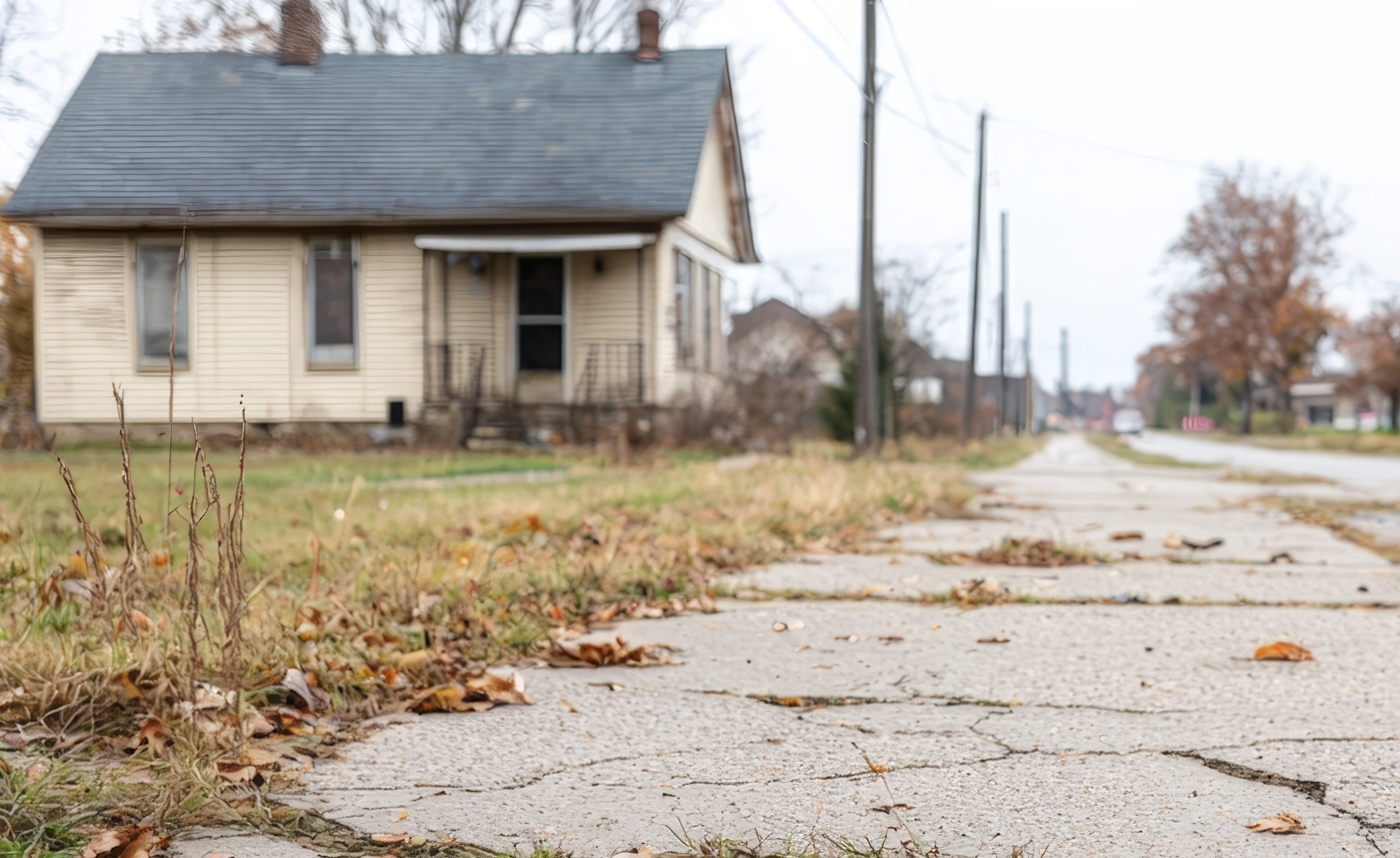
In South Carolina in 2021, at least 10% of rural households in nine counties had no vehicles, and more than half of the state’s counties were above the national average, according to The Nerve’s review of available federal data.
The U.S. Census Bureau defines no-vehicle households as “those who do not keep any passenger cars, vans, or pickup/panel trucks of one-ton capacity or less at home for the use of household members, excluding vehicles used only for business purposes,” Ethan Alpern, who is the acting director of the Office of Information and Library Services at the U.S. Bureau of Transportation Statistics (BTS), said in an email response this month to The Nerve.
A rural area is a Census block group with its “centroid" (defined online as the geographical point that represents the average location of a region’s population) outside of the area designated by the Census Bureau as “an urbanized area or urban cluster,” Alpern said.
The BTS in 2023 published an analysis on access to “intercity” transportation in rural areas in the U.S., including 2021 data on the percentage of rural households with no vehicles. Alpern said the study was based on data from the Census Bureau’s American Community Survey.
The Nerve’s review of the federal data found that in the state’s 46 counties, an average of 6.4% of rural households had no vehicles in 2021. Twenty-seven counties were above the national average of 4.2% for all rural areas in that year.
The nine counties having at least 10% of rural households with no vehicles in 2021 were as follows, with their respective percentages in parentheses: Allendale (15%), Bamberg (15%), Barnwell (14%), Marlboro (13%), Williamsburg (13%), Lee (12%), Dillon (11%), Clarendon (10%) and Marion (10%).
Chesterfield and Hampton counties each had related rates of 9%. Colleton County recorded an 8% rate, while Darlington, Edgefield, Orangeburg, Sumter and Union counties listed 7% rates.
In a companion story today on the lack of private, rural transportation businesses statewide, The Nerve revealed that Allendale, Bamberg and Hampton counties had received no remitted “transportation network company (TNC)” fees from the state from Jan. 1, 2023, through June 30 of this year, which indicates that no rides from TNC companies, including Uber and Lyft, originated in unincorporated areas in those counties.
The BTS analysis highlighted that while 85% of the nation’s rural residents have “reasonable access” to intercity transportation – defined as living with 75 miles of a large airport or within 25 miles of a smaller airport or an intercity bus stop or rail station – lack of “reasonable access falls disproportionately on low-income households.”
In a recent interview with The Nerve, Kirbie Ferrell, spokeswoman for the nonprofit Eno Center for Transportation in Washington, D.C., described South Carolina’s no-vehicle rates in some rural areas as “shocking.”
“One of the things that is so stunning, especially to those of us who have cars and the ability to get around so easily, is thinking of a life in which we didn’t have that, in a world in which we didn’t have that,” Ferrell said. “And there are so many people who do struggle with that, and it’s not even just car-less communities.”
On its website, the Eno Center describes itself as an “independent, non-partisan think-tank that shapes public debate on critical multimodal transportation issues and builds an innovative network of transportation professionals.”
In July, the center published a study, which was authored by Ferrell, on rural transit in the U.S., titled, “Connecting Communities: Options and Considerations for Enhancing Rural Transit,” which, according to a companion press release, “explores a persistent challenge facing rural America – how to provide reliable, equitable, and financially sustainable public transportation in places where density is low, distances are long, and providing transit is costly.”
An executive summary with the study noted that ride-booking “partnerships, such as those with Uber and Lyft, provide the highest level of user convenience but can be cost-prohibitive and less accessible to individuals with disabilities if not accommodated properly.”
Ferrell told The Nerve that getting to bus stops can be “incredibly challenging in rural areas because populations are dispersed, especially in rural areas that have a higher percentage of elderly people or people with disabilities.”
“We’re seeing a larger percentage now of Americans aging,” she said. “Those are vulnerable populations. And we’re seeing so many people who suddenly don’t have access to move around at least safely in their own communities in which maybe they were born and raised in and have lived their entire lives.”
“What kind of quality of life is someone experiencing?” Ferrell added.
Brundrett is the news editor of The Nerve (www.thenerve.org). Contact him at 803-394-8273 or [email protected]. Follow The Nerve on Facebook, Instagram and X (formerlyTwitter) @thenervesc.
Nerve stories are free to reprint and repost with permission by and credit to The Nerve.