![[DEV] SC Policy Council](https://assets.nationbuilder.com/themes/64a70761f9279500cd767ee8/attachments/original/1680182376/logo-nerve.jpeg?1680182376)


By RICK BRUNDRETT
UPDATE: 05/19/26 - Supreme Court Justice John Few in a written statement announced that he would participate in his last oral arguments this week so he can finish his work on the filing of opinions by the time his term expires on July 31. In a follow-up written response to The Nerve, he confirmed that he would not serve on the court in "holdover status" past July 31. Meanwhile, the Judicial Merit Selection Commission has not yet publicly said when rescreening hearings for Few's seat will occur.
More than three weeks after sitting S.C. Supreme Court Justice John Few dropped out of the race for his seat – triggering an automatic cancellation of the election – the state panel responsible for qualifying judicial candidates has been silent about when rescreening hearings will take place.
Meanwhile, Few in a written response this week to The Nerve said he plans to continue serving through July 31, when his 10-year term expires, in the seat that he’s held since 2016. He also said he didn’t know when the state Judicial Merit Selection Commission (JMSC) will hold rescreening hearings.
Asked if he planned to serve beyond his term, as allowed under the S.C. Constitution, Few replied that “no final decision has been made on this point.”
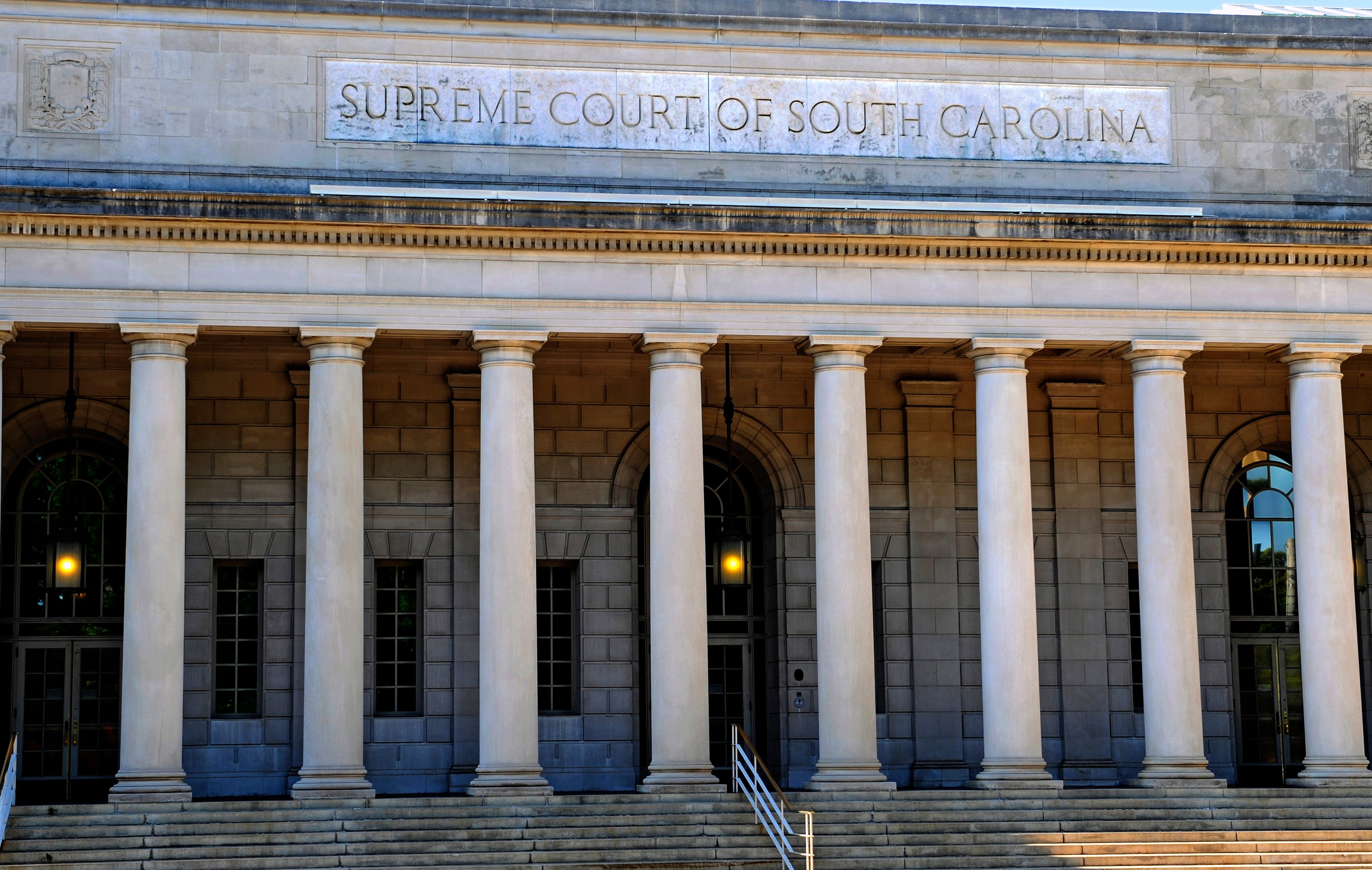
The state’s top court has five members, led by Chief Justice John Kittredge.
The four-way race for Few’s seat included former longtime Republican S.C. House Speaker Jay Lucas. It is unknown whether he will reapply for the seat.
Lucas didn’t respond to a written message this week from The Nerve seeking comment.
In a written response this week to The Nerve, Erin Crawford, the JMSC’s chief lawyer, said she has “not been notified of another scheduled screening at this time,” though she didn’t respond to a follow-up question about who makes that decision.
Attorney-Rep. Micah Caskey, R-Lexington, who was the JMSC’s chairman during last November’s screening hearings for Few’s seat, didn’t respond to a written request this week from The Nerve seeking comment on the rescreening schedule.
Under JMSC rules, the chairman annually alternates the chairmanship with the vice chairman, who at the time of last year's screening hearings was Sen. Luke Rankin, R-Horry. As with Caskey, Rankin, an attorney who is now the JMSC chairman and also serves as the Senate Judiciary Committee chairman, didn't respond to The Nerve's written request for comment.
Few, a former longtime circuit court judge and chief judge of the S.C. Court of Appeals – the state’s second-highest court – announced on March 3, the day before the scheduled election in the 170-member Legislature for his seat, that he was withdrawing from the race, which included three other candidates found qualified by the JMSC.
“It has become clear to me over recent weeks that I do not – and will not – have the votes to be reelected to the Supreme Court of South Carolina,” Few wrote then on social media.
South Carolina and Virginia are the only states where their legislatures play primary roles in electing judges. In the Palmetto State, contested races involving incumbent judges are uncommon; before this year, the last one involving a sitting Supreme Court justice was in 2014.
Legislative domination
As The Nerve reported last November, the high court for the first time in its more than 50-year modern history currently is free of ex-lawmakers. The story revealed that since 1973 when significant constitutional changes in the state court system took effect, 16 of the 23 justices over the period were former legislators.
The high court could have returned to its historic makeup if the scheduled March 4 election had gone forward, and ex-House speaker Lucas had been elected.
As The Nerve’s November story pointed out, Lucas has scant judicial experience, serving a short stint as a Hartsville city judge in the mid-1990s. He ended his more than 23-year tenure in the House with his 2022 retirement, having served as that chamber’s top officer since 2014.
Shortly after his retirement from the Legislature, Lucas was named as the senior vice president for government affairs at Prisma Health, the state’s largest healthcare organization, according to its website. He also has been a longtime partner in the Pee Dee law firm now known as Lucas, White, & Mitchell, according to the firm’s website.
Last November, the 12-member JMSC – six of whom are lawmakers – qualified Lucas, Few and two other candidates for Few’s seat – Administrative Law Court (ALC) Chief Judge Ralph King “Tripp” Anderson and Court of Appeals Judge Blake Hewitt. As with Few, Anderson and Hewitt never served in the Legislature.
Under a 2024 change in state law that took effect last year, the House speaker appoints four members of the JMSC, while the Senate Judiciary Committee chairman and Senate president each appoint two members. The governor appoints the other four members.
Asked immediately after Few’s withdrawal announcement whether he planned to reapply for the Supreme Court seat, Anderson, who was first elected to the ALC in 1994 and has been its chief judge since 2009, said in a written response to The Nerve, “Justice Few’s decision has not changed anything for me.”
Hewitt, who was elected to the Court of Appeals in 2019, didn’t respond to a written message this week from The Nerve seeking comment.
At the time of screening hearings last November, Lucas was 68 years old, while Anderson and Hewitt were 66 and 47, respectively. State law requires judges to retire in the year that they turn 72, though Lucas disputed that interpretation during his hearing.
Supreme Court associate justices make $233,606 annually; the chief justice’s salary is $245,286, according to the Judicial Department’s salary database.
Supreme limbo
In ending his reelection bid on March 3, Few, 62, said that in “coming to grips with the reality that I cannot win this race, my excitement over returning to the private sector has grown exponentially,” noting that he plans to return to the “active practice of law with the same energy and enthusiasm that has defined my career as a judge and Justice.”
Few served as a circuit court judge for nearly 10 years before becoming chief judge of the Court of Appeals in 2010, a position he held until his election to the Supreme Court in 2016.
Under state law, if an incumbent judge who has been renominated to the court seat withdraws before a scheduled election in the Legislature, the election may not be held at that time, and the selection process must be reopened.
The JMSC typically holds screening hearings each fall to decide whether to qualify candidates. For those nominees, the Legislature in recent years has held elections during a joint session in February or March of the following year; a state law passed this year requires that judicial elections be held on the first Wednesday in March. Elections also have been held later in the spring, though they usually are more sporadic.
If Few’s reopened seat isn’t screened until this fall, an election likely won’t be held until after the Legislature reconvenes next January.
Under the S.C. Constitution, although the terms of Supreme Court justices are for 10 years – the longest of any court – they “shall continue in office until their successors shall be elected and qualified,” a situation commonly referred to as “holdover status.”
Other types of judges, including Court of Appeals, Administrative Law Court, master-in-equity, family, magistrate and municipal court judges, also can continue serving in holdover status under state law or the S.C. Constitution.
The Nerve over the years has reported about the longstanding problem of magistrates in holdover status; an August 2024 story, for example, revealed that 38 magistrates in 17 counties at the time were in holdover status, including two serving more than 18 years past their terms.
The South Carolina Policy Council (SCPC)– the parent organization of The Nerve – in recent years has published judicial reform proposals, including closing the magistrate-holdover loophole. The Policy Council also has recommended that the JMSC be abolished and that the governor appoint judges with Senate confirmation, similar to the federal model, which would require a state constitutional change.
Earlier this month, SCPC released an analysis of two pending judicial reform bills.
Brundrett is the news editor of The Nerve (www.thenerve.org). Contact him at 803-394-8273 or [email protected]. Follow The Nerve on Facebook, Instagram and X (formerly Twitter) @thenervesc.
Nerve stories are free to reprint and repost with permission by and credit to The Nerve.