![[DEV] SC Policy Council](https://assets.nationbuilder.com/themes/64a70761f9279500cd767ee8/attachments/original/1680182376/logo-nerve.jpeg?1680182376)


By RICK BRUNDRETT
UPDATE: 3/3/26 – S.C. Supreme Court Associate Justice John Few announced on social media this morning that he was withdrawing from tomorrow’s scheduled election in the Legislature, writing on X, “It has become clear to me over recent weeks that I do not – and will not – have the votes to be reelected to the Supreme Court of South Carolina.” Under state law, if an incumbent judge who has been renominated to the court seat withdraws before a scheduled election in the Legislature, the election may not be held at that time, and the selection process must be reopened. The state Judicial Merit Selection Commission this morning had not announced when new screening hearings would be held for Few's seat. Three other nominated candidates – ex-S.C. House Speaker Jay Lucas, S.C. Court of Appeals Judge Blake Hewitt, and Ralph King “Tripp” Anderson, the S.C. Administrative Law Court’s chief judge – also were seeking Few’s seat. Asked this afternoon if he plans to reapply for the seat, Anderson in a written response to The Nerve said, “Justice Few’s decision has not changed anything for me.”
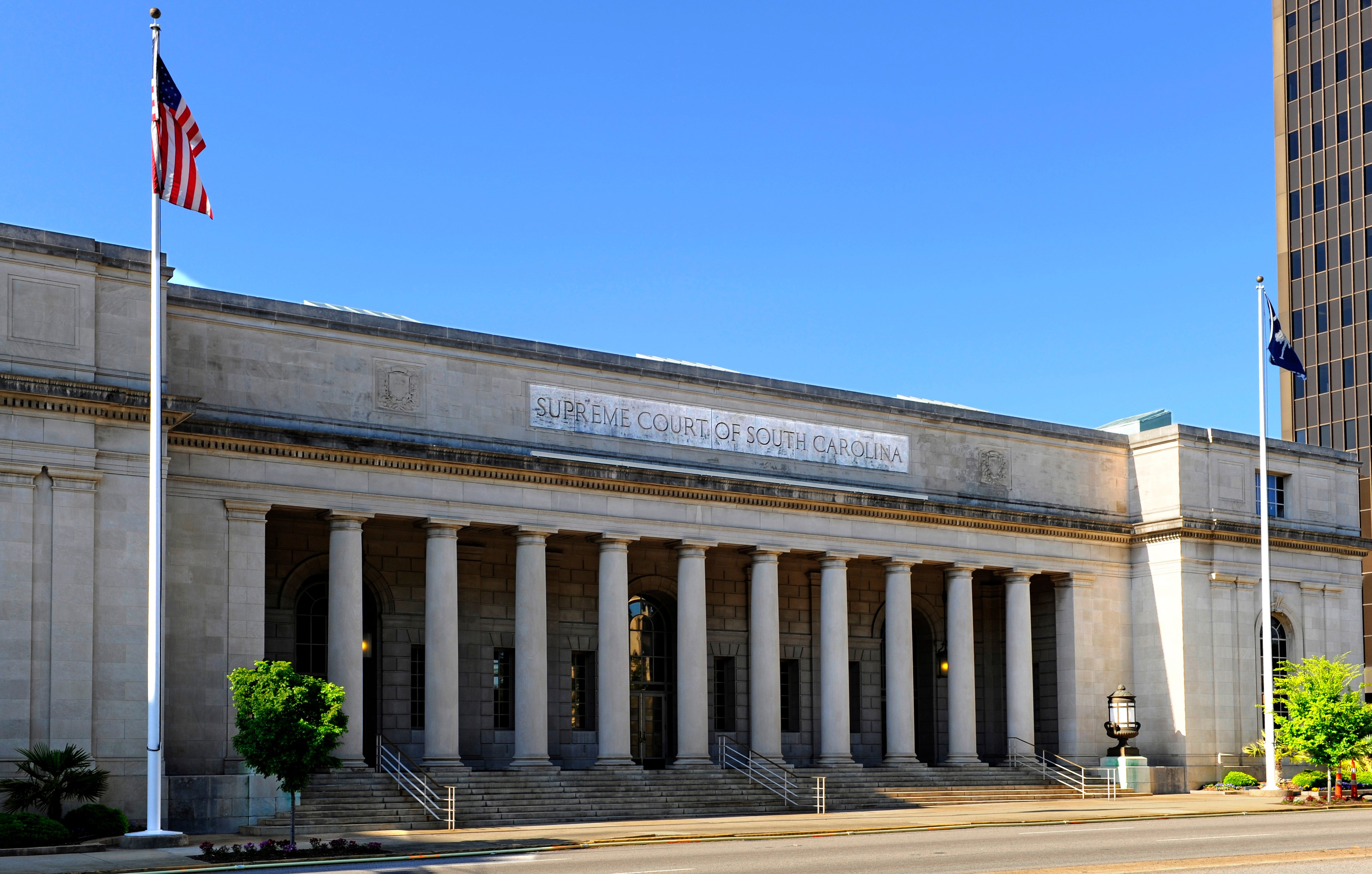
As candidates in a rare S.C. Supreme Court race have formally started seeking votes of the lawmakers who will decide the March 4 election, some legislators are raising concerns about the ex-House speaker’s bid for the top court.
In an interview earlier this month with The Nerve, Republican Sen. Greg Hembree, the former longtime top prosecutor in Horry and Georgetown counties, said while former Republican House Speaker Jay Lucas of Hartsville is a “really good lawyer” and a “smart guy” who was a “good (House) speaker,” the other three Supreme Court candidates have “superior experience - I mean, it’s not even close.”
Asked whether he would vote for Lucas, Hembree, who was interviewed on Feb. 4, replied, “That would be premature to answer that question,” noting that the official period for judicial candidates to solicit or accept lawmakers’ votes had not yet begun. That period began at noon on Feb. 9.
Lucas, who was elected by his then-House colleagues in 2014 as that chamber’s top officer and served in that role until he retired in 2022, worked a brief stint in the mid-1990s as a Hartsville city judge, but he never was elected by the Legislature to a higher-level court.
In contrast, his opponents include sitting Supreme Court Associate Justice John Few, who is seeking reelection to another 10-year term and previously served nearly 10 years as a circuit court judge and as the chief judge of the S.C. Court of Appeals from 2010-16; state Administrative Law Court Chief Judge Ralph King “Tripp” Anderson, who was elected to that court in 1994 and has been its chief judge since 2009; and Court of Appeals Judge Blake Hewitt, who was elected to the state’s second-highest court in 2019.
South Carolina and Virginia are the only two states where their legislatures play primary roles in electing judges. Contested judicial elections in the S.C. Legislature involving sitting judges are unusual, including for Supreme Court seats.
As The Nerve revealed last November, the top court, starting in later 2024, has been free of ex-lawmakers – the first time since 1973 when significant constitutional changes in the state's court system took effect. Over the period, 16 of the 23 justices were former legislators.
The Legislature would return to its historic practice of electing former legislators to the high court if Lucas wins Few’s seat. As an associate justice, Few’s annual salary is $233,606; Chief Justice John Kittredge makes $245,286, according to the Judicial Department’s website.
Hembree in his interview with The Nerve also raised longstanding concerns by senators about the House’s potential control of judicial elections.
Lucas did not respond to The Nerve’s written request this week for comment.
Public confidence ‘fragile’
“We’ve got a good team of judges; they’re not all great, but they’re good,” Hembree, who was the 15th Circuit solicitor from 1999-2012, told The Nerve. “But when we’re looking at the (election) process … there are weaknesses in this process. We need to fix those … and see how if it worked or if it didn’t work.”
As for Lucas’ bid to join the Supreme Court, Hembree, who currently chairs the Senate Education Committee, said: “This effort just sort of slaps that in the face and says, ‘Well, you know, I’m in the club. I was a House speaker … and I’m tired of being retired; I want to be important again.’”
“It’s not good for that goal of trying to build trust in the third co-equal branch of government. ... It’s really about the trust in the General Assembly to do this job,” he added.
Hembree’s interview with The Nerve followed an unexpected written public statement by attorney-Sen. Luke Rankin, R-Horry, who is the Senate Judiciary Committee chairman and the vice-chairman of the state judicial screening committee known as the Judicial Merit Selection Commission (JMSC). As the Senate Judiciary chairman, he has the authority to appoint two of the current 12 JMSC members.
In his written statement that was included in the JMSC’s Jan. 28 draft report on the qualifications of the candidates for the Supreme Court seat – all four of whom were found qualified – Rankin said while he voted to find Lucas qualified, “I write separately to express concerns that, while not disqualifying, raise serious questions about what his election to the Court may mean.”
Although Lucas is “unquestionably an excellent attorney, and his decades of public service are laudable and deserve our respect and thanks,” he has “no prior judicial service and lacks sustained or significant appellate practice,” Rankin wrote.
“My concern instead,” Rankin continued, “is how his background may be perceived by the citizens who must live with his rulings. Public confidence is fragile, and perception can matter as much as or more than reality.”
Asked about Rankin’s position, Hembree told The Nerve, “I totally agree with Rankin.”
‘Desperate need’ for change
State Rep. Jordan Pace, R-Berkeley, who chairs the South Carolina Freedom Caucus (SCFC), also expressed concerns about Lucas’ candidacy when contacted earlier this month by The Nerve.
“The SCFC has been fighting to fix the way SC picks judges for years – real judicial reform,” Pace said in a Feb. 6 written statement. “This Supreme Court race is a great example of the desperate need to change the way we’ve always done it.”
In recent years, the South Carolina Policy Council – The Nerve’s parent organization – has recommended the JMSC be abolished and that the governor appoint judges with Senate confirmation, similar to the federal model.
During last year’s legislative session, Freedom Caucus members backed a joint resolution calling for changes in the S.C. Constitution that would eliminate the JMSC and allow the governor to appoint Supreme Court, Court of Appeals and circuit court judges with advice and consent of the General Assembly.
The resolution, whose lead sponsor is Freedom Caucus member Rep. Josiah Magnuson, R-Spartanburg, has remained in the House Judiciary Committee, chaired by attorney-Rep. Wes Newton, R-Beaufort. Given this year is the final year of a two-year legislative cycle, any legislation not approved this year would have to be reintroduced in 2027.
In a related matter, the House last week overwhelmingly approved a bill that would allow the governor to appoint all 12 members of the JMSC and also would ban sitting lawmakers or their immediate family members from serving on the JMSC. Whether that legislation – which wouldn’t require a constitutional amendment – will pass the Senate remains to be seen.
Stacked deck
Under state law, family, circuit, Administrative Law Court, Court of Appeals and Supreme Court candidates are qualified by the JMSC and elected by a majority of the General Assembly meeting in a joint session.
That means candidates must get at least 86 votes if the full 170-member Legislature votes in a joint session. Senators have long contended that as a bloc, the 124-member House effectively controls judicial elections compared to the 46-member Senate.
The Nerve found in a review of judicial and legislative records that at least 11 sitting, full-time judges elected or confirmed by the Legislature are former House members, including:
- Court of Appeals Judge Paula Thomas
- Circuit Court judges Paul Burch, J. Derham Cole, Thomas Hughston, William Keesley, R. Keith Kelly, J. Cordell Maddox, Roger Young
- Horry County Master-in-Equity Judge Alan Clemmons (a former JMSC chairman)
- Family Court judges Mandy Kimmons, James McGee
The state's court system also includes judges who are relatives or former law partners of current or ex-lawmakers, as The Nerve previously has reported.
As an occupation, lawyers continue to be overrepresented in each chamber. In the Senate, 20 members, or 43% of the chamber, are attorneys; in the House, 29 members, or 23% of the chamber, are lawyers, according to the Legislature’s website.
‘Potentially unconstitutional’
Senators in recent years have proposed changing state law to require a majority of each chamber to elect judicial candidates instead of a collective majority of both chambers, which they contend would give the Senate equal voting power with the much-larger House.
In comparison, Virginia elects judges by a majority of each chamber, not a majority of its entire legislature.
The original version of a 2024 judicial-reform bill that eventually became S.C. law – which most significantly gave the governor the authority to appoint four JMSC members – included the each-chamber, majority-vote requirement, though that provision wasn’t part of the bill’s final compromise version.
“They (the House) can take control if they want to,” Hembree, who was the bill’s lead sponsor, told The Nerve. "If they bloc vote, then the Senate has no vote.”
“Sometimes,” he added, “it has been the Senate that got the person elected – the House was split, and the Senate came in and we’ve kind of delivered the victory. So that can happen, but certainly the House has an outsized influence in this process.”
Hembree contended that the current election system is “potentially unconstitutional” because it “violates the one-man, one-vote rule,” and that “there’s a lawsuit there to be had if somebody wanted to take it up.”
Other senators have shared similar concerns about the House’s influence in judicial elections. For example, Senate Finance Committee Chairman Harvey Peeler, R-Cherokee, was the lead sponsor of a 2023 judicial-reform bill that included, among other things, the each-chamber, majority-vote requirement, though the legislation never made it out the Senate Judiciary Committee.
Absent a constitutional amendment that would allow the governor to appoint judges with Senate confirmation, the South Carolina Policy Council has supported a number of judicial reforms in state law, including requiring a majority vote of each legislative chamber in judicial elections.
Meanwhile, the Legislature is expected to fill a total of 19 Supreme Court, Court of Appeals, Administrative Law Court, circuit and family court seats in a joint session on March 4. The JMSC qualified a collective 29 candidates for those seats; most of the seats are being sought by unopposed incumbents.
Historically, even when there have been judicial races, candidates who believed they didn’t have enough votes in pre-election tallies among lawmakers typically have dropped out, leaving sole, unopposed candidates.
Nerve intern Abagael Strating contributed to this story. Brundrett is the news editor of The Nerve (www.thenerve.org). Contact him at 803-394-8273 or [email protected]. Follow The Nerve on Facebook, Instagram and X (formerlyTwitter) @thenervesc.
Nerve stories are free to reprint and repost with permission by and credit to The Nerve.