
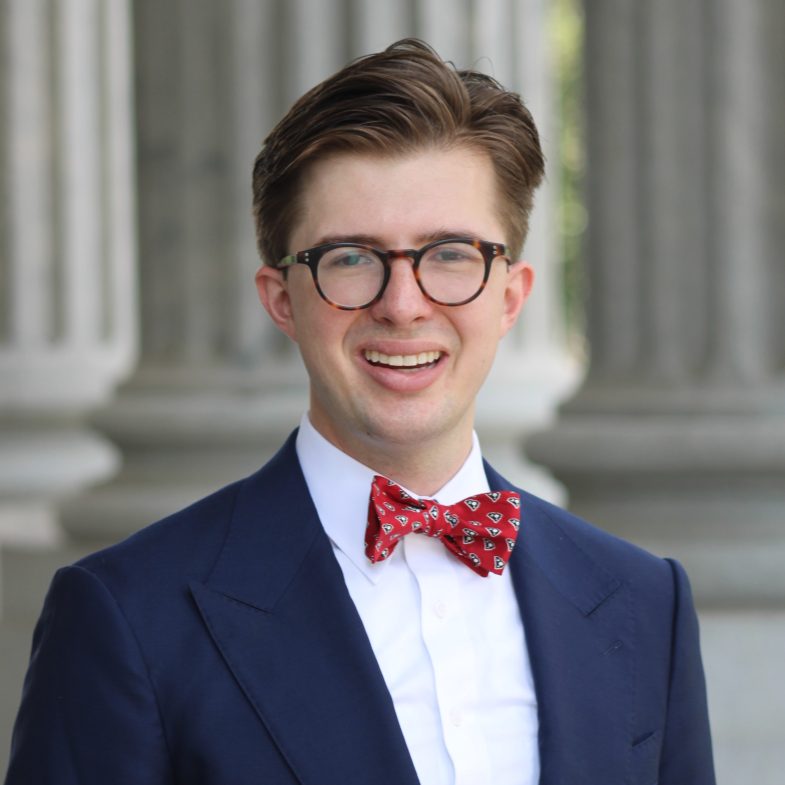


By ROBERT CATHCART
Editor’s Note: This opinion piece was written by Robert Cathcart, the chief executive officer of the South Carolina Policy Council – the parent organization of The Nerve.
Over the last two weeks, South Carolinians became aware of a “Discover South Carolina” – the official state tourism marketing brand – advertisement blitz in New York City’s Times Square. The S.C. Department of Parks, Recreation and Tourism (SCPRT) claims the three-day, approximately $1.5 million promotion campaign – funded by state taxpayers – resulted in a big boost to the agency’s website traffic.
That's right – while the Cabinet agency can't estimate actual tourism or tax dollars gained, it brags that the ad increased the agency's click rate. And rather than citing exact numbers of new impressions, it simply claims that website traffic increased by 84%, according to a report by Mike Burkhold, who is the S.C. comptroller general-elect.
Although SCPRT is taking a victory lap on this accomplishment, its latest marketing project demonstrates that the agency is tone-deaf at best and wasteful at worst. This expenditure should never have been approved. It showcases two of our state government's worst qualities: overspending with a lack of accountability.
Beyond those valid concerns, the advertising campaign confirms what many South Carolinians have long believed: State government is all too willing to use taxpayers’ hard-earned dollars to pursue more tax revenue without considering the impact to them.
It is no secret that our state is growing quickly – the fastest-growing state in the Southeast. Yet, in spite of this, many state lawmakers and bureaucrats believe they should continue to dole out incentives to companies that would likely come or expand here without the massive taxpayer-backed gifts.
Call it misdirected Southern hospitality. Our state officials certainly understand the biblical admonition to be innocent as a dove, but they neglect the exhortation to be as shrewd as a serpent.
Given that South Carolina has long been a desirable location for businesses and tourists, we don’t need to keep spending massive amounts of tax dollars to attract tourists or encourage companies to locate or expand here.
While state lawmakers in recent years have been more than eager to approve generous corporate-welfare packages tailored to certain large companies and designate sizable parts of the annual budget for tourism marketing, the details of how that money is spent typically have been crafted in advance by unelected bureaucrats in the ivory towers of SCPRT and the S.C. Department of Commerce.
Often, after the agencies perfect their plans, create their slick graphics, and put together their slideshow presentations, they trudge to the General Assembly with their hands held out. Sometimes, in the case of the Scout Motors deal, they do so with a clear plan and dollar amount attached (never mind the fact that Commerce later had to significantly revise that amount because of cost overruns).
Other times, they ask for a general budget request for "advertising" or "promotion" and then choose to spend that money as they best see fit. In both instances, the General Assembly should better use its power of the purse to pursue transparency, accountability, and wise stewardship of every taxpayer dollar.
Agencies generally have an incentive to chase more tax revenues that increase their own budgets. But some agencies seem more concerned with the opinions, goals, or plans of those outside South Carolina than they do with making South Carolinians' lives better.
Governor-elect Alan Wilson, Lieutenant Governor-elect Mike Reichenbach and Comptroller General-elect Burkhold hopefully will live up to their word to focus state agencies on putting South Carolina families first. We've had enough of S.C. agencies putting out-of-state businesses and tourists first – though that message likely won’t show up on a Times Square digital billboard.
Cathcart, who became the Policy Council’s CEO in September, previously served as an attorney, policy advisor and legislative liaison at two state agencies. He graduated from the University of South Carolina School of Law and USC’s Honors College with a bachelor’s degree in history.